Na Seannachaidh Stiùbhardaich – “The Stewarts’ Storyteller”

The Stewarts of Balquhidder Blog

Highland Butter Suitable for Waterproofing Sheep

by | Aug 3, 2024 | General Interest, Social History | 0 comments

Highland Butter Suitable for Waterproofing Sheep

In the late 18th and early 19th centuries in the Highlands of Scotland, butter was made by hand in wooden butter churns. Unlike today, this Highland butter was not fit for human consumption. It was not used to spread on bread or melt on a hot muffin or bagel. It was inedible. It was used primarily for cooking.

But it had another use which just seems so iconically Scottish. it was used for waterproofing sheep.
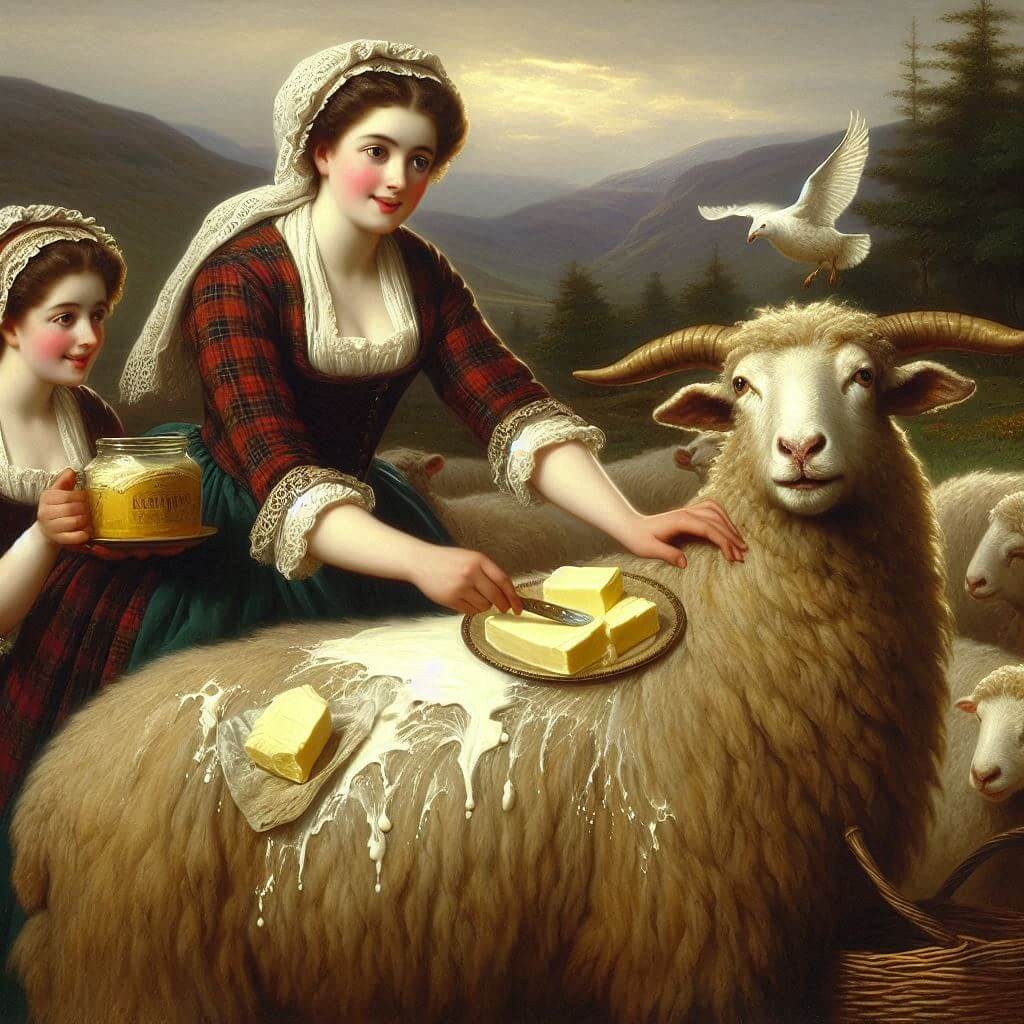
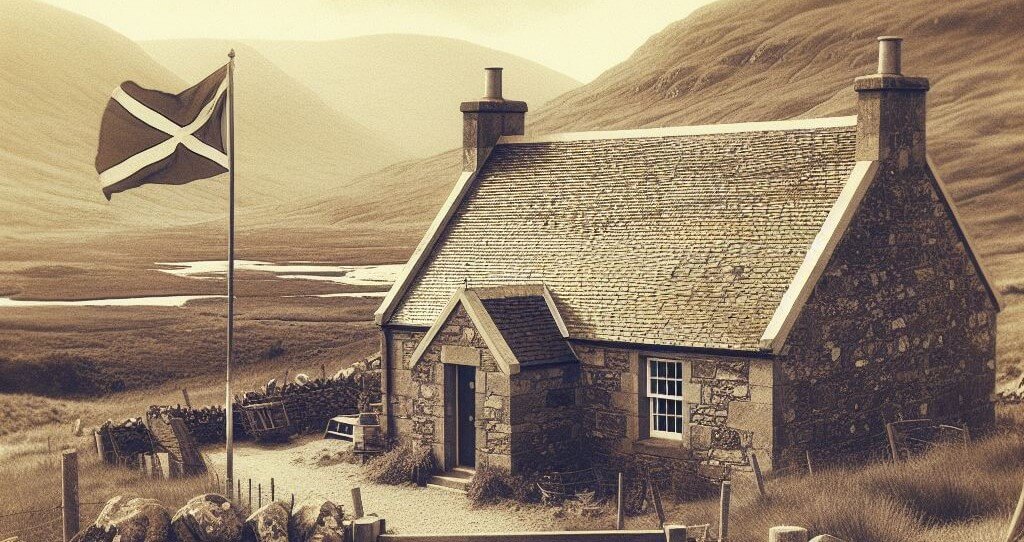
AI-generated image of an 18th century Scottish Highland woman spreading butter on sheep
(AI-generated image by Bing Image Creator)

Butter, on the farms, was used for cooking, but was not otherwise usually eaten; [it was] smeared on sheep; the butter and the natural oil in the fleece gave resistance to wet.

Mary Stewart, 1767-1837

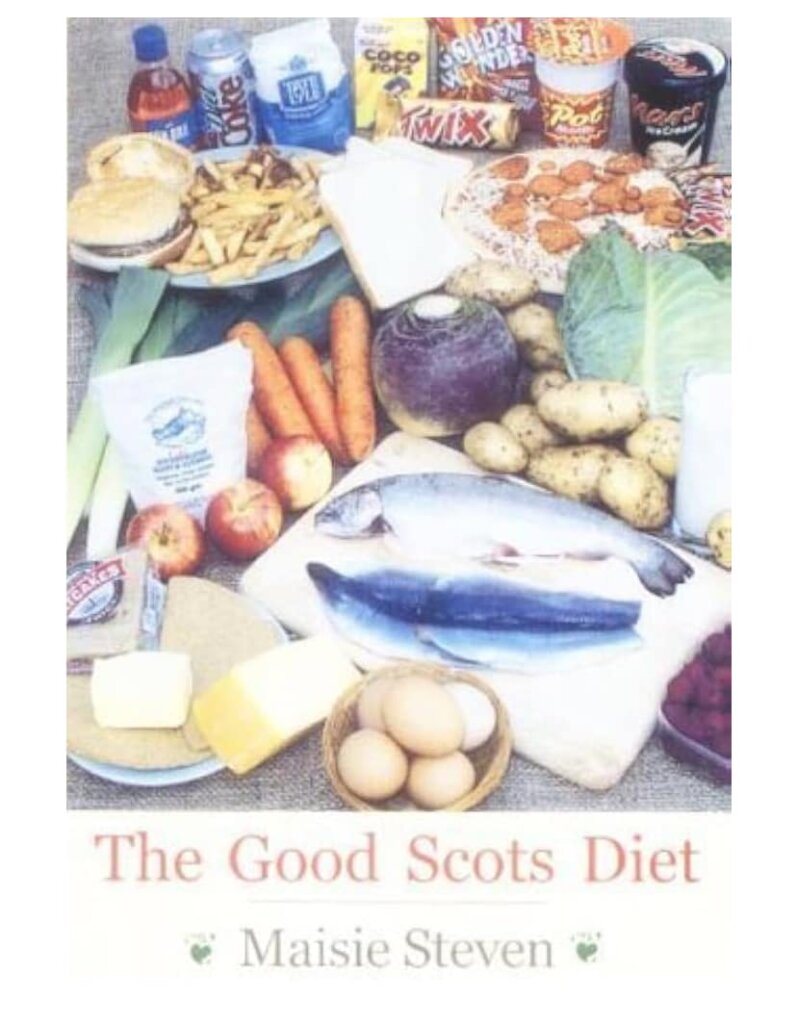
Private papers for Mary Stewart in Glentarken (1767-1837) are referenced in a 20th-century cookbook (The Good Scots Diet and What Happened to It? (1985) by Maise Steven), in which Mary Stewart describes the quality and usages for home-churned Highland butter in the late 1700s, including waterproofing sheep.
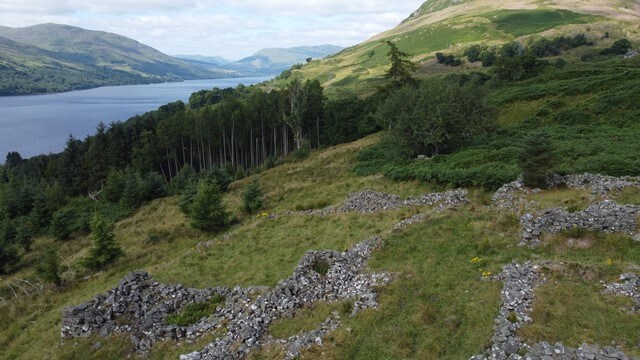
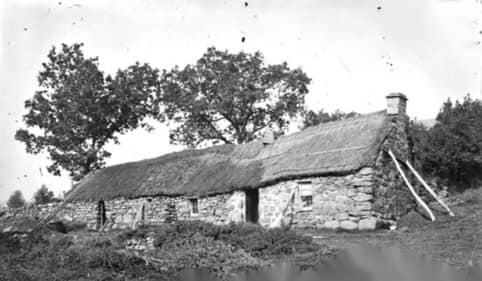
Mary Stewart’s actual home in Easter Glentarken with a view of Loch Earn. It was built by her grandfather and is now a ruin. Mary’s brother, Robert Stewart, was my 4x-great-grandfather.
(photo by Ryk Brown, 2023)
book cover with fresh food spread on a table

Cookbook author Maise Steven describes the poor quality of homemade Highland butter and quotes Mary Stewart:

…from a manuscript study of the Life and Times of Mary Stewart (1767-1837), a native of Glentarken in Perthshire, written by her great-grandson in conjunction with Mrs. N. Watt of Comrie:

“Butter, on the farms, was used for cooking, but was not otherwise usually eaten; for the most part it was mixed with Archangel tar and smeared on sheep; the butter and the natural oil in the fleece gave resistance to wet, and the tar had an antiseptic quality.”

Predictably, though, the scarcity of fat for cooking meant that such things as pies became luxury items: vegetable oils were not used at the time.

Several of the more fastidious early travellers in Scotland were repelled by the butter. One can sympathise with their complaint that it was invariably full of cows’ hairs.

(The Good Scots Diet and What Happened to It? by Maise Steven, Aberdeen University Press, July 1, 1985, p. 41)
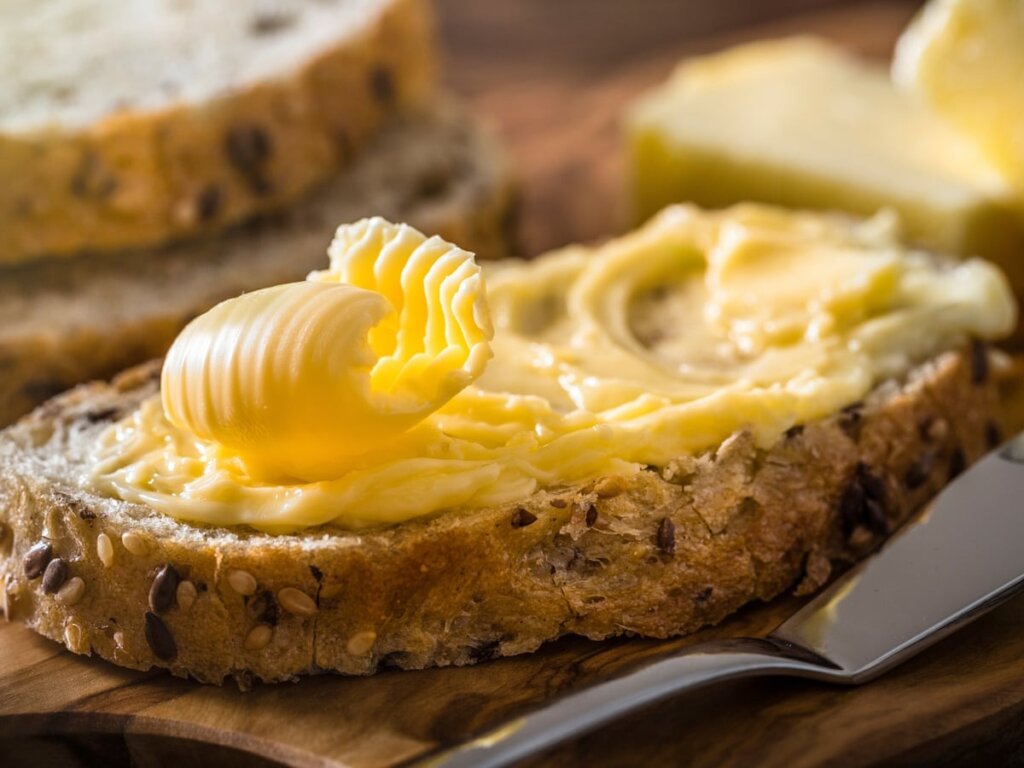
Next time you spread butter on bread, be thankful you’re not picking out cows’ hairs.

Author

  • Ryk Brown, FSAScot, is one of the co-founders of the Stewarts of Balquhidder Research Group from 2002. He is the administrator of this website and our Facebook group. He is a descendant of the Stewarts of Dalveich (Ardvorlich VII), and has been a genealogist since 1995. He lives in Hamilton, Ontario, Canada and has travelled to Balquhidder. Agus, tha beagan Gaidhlig agad. (He speaks a little Gaelic.) Ryk is a member of the Stewart Society in Edinburgh. In 2025, Ryk was admitted as a Fellow of the Society of Antiquaries of Scotland.

    View all posts

Categories

Archives

Author

Ryk Brown, FSAScot

Ryk Brown, FSAScot

Contributing writer

Ryk Brown, FSAScot, is one of the co-founders of the Stewarts of Balquhidder Research Group from 2002. He is the administrator of this website and our Facebook group. He is a descendant of the Stewarts of Dalveich (Ardvorlich VII), and has been a genealogist since 1995. He lives in Hamilton, Ontario, Canada and has travelled to Balquhidder. Agus, tha beagan Gaidhlig agad. (He speaks a little Gaelic.) Ryk is a member of the Stewart Society in Edinburgh. In 2025, Ryk was admitted as a Fellow of the Society of Antiquaries of Scotland.

Recent Posts

artistic photo of an old hand-written document

A feu and a tack — what’s the difference?

Understanding ancient Scottish land leases Have you run across the terms feu/feuer or tack/tacksman in the course of your Scottish history or genealogy research and wondered what they are or what the difference is? Landlords, Feuers, and Tacksmen A feu and a tack were...

Introduction to Genealogical DNA

Introduction to the basics of genealogical DNA, especially Y-DNA with an explanation of haplogroups, subclades and SNPs.

artistic photo of an old hand-written document

Who Was the Author of Stewarts of the South?

We now know that Capt. James Stewart, Factor of Atholl, was not the author of Stewarts of the South, so who was?

Understanding the Stewarts of Balquhidder DNA

Understanding the Y-DNA haplogroup and SNP sub-clades that make up the genetic history of the Stewarts of Balquhidder.

Muckle Kate Ferguson

Stories of Muckle Kate Ferguson (nee Stewart) Below are four stories of Muckle Kate Ferguson (1798-1872), known as "the fattest woman in Britain." She was proprietor of Ferguson's Inn, known in the Gaelic as Tigh Mhaide, located at Brig o' Turk at the foot of Glen...
AI-generated image of of n 18th century schoolhouse

The Catholic Jacobite School at Torry

The Catholic Jacobite School at Torry Extracts from “Education in the Parish of Callander for Four Centuries. Published 1908 by D. Ferguson, Callander Stationers and Printers. The Catholic Jacobite School in Kilmadock In 1735 much perturbation was caused to the stern...
arial view of the village of Callander, Scotland

The Battle of Callander (1646)

The Battle of Callander This article was originally posted on Callander Heritage. Reposted with permission. 1646 was the fifth and final year of the First English Civil War. In February 1646, during the campaigns of Montrose, a battle was fought at Callander between...
a pile of rubble at the base of a rust coloured mountain with the sun glaring down from above

Drumlich

A history of the farmtoun of Drumlich in the far wester braes of Balquhidder, including its Stewart occupants.

The Catholic Jacobite School in Kilmadock

A description of the Catholic Jacobite school in Kilmadock, Perthshire, Scotland in 1745 and the students who attended.

Did Patrick Stewart of Bladen, North Carolina, have a son named John?

A refutation of the claims made by J. Montgomery Seaver in Stewart Family Records, 1929.

0 Comments

Submit a Comment

Your email address will not be published. Required fields are marked *